
Accreditation as a Safeguard for CMS Compliance and Patient Safety
Gaps in regulatory oversight can threaten patient safety and quality care. Accreditation provides ongoing support to facilities to help maintain excellence in patient care.
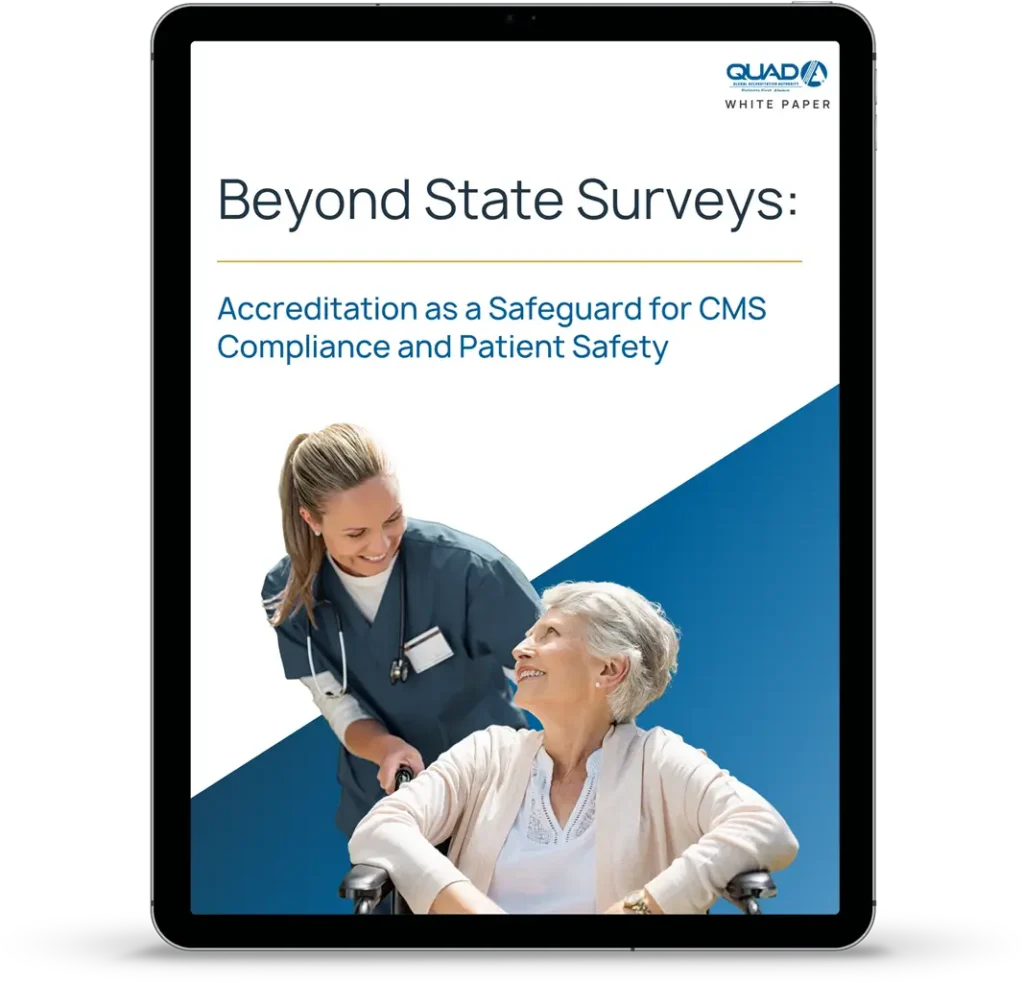
The Risks of Lapsed Oversight
CMS and state survey agencies are not always provided with adequate resources to meet rising demands. This tremendous pressure threatens to create gaps in oversight that could place patients, providers, and states at unnecessary risk.
In this white paper, we explore the challenges faced by state Survey Agencies, and how third-party accreditation organizations like QUAD A work in tandem with CMS to maintain consistent oversight over our nation’s healthcare facilities.
- More Frequent Surveying: QUAD A conducts regular resurveys to ensure that facilities continue their commitment to high standards of care and patient safety.
- Better Patient Outcomes: Accreditation through QUAD A provides a dialogue-based approach that facilitates sustained compliance, which has the potential to save lives.1,2
- Collect, Report, Improve: QUAD A-accredited facilities actively participate in one of the biggest healthcare databases by reporting on Patient Safety Reporting Data and leveraging it to make improvements to their programs.
Download the White Paper
State Health Agencies Struggle to Reinforce Requirements
State agencies are working tirelessly to conduct surveys in a timely manner, but they face logistical issues stemming from stagnant funding, the expansion of provider facilities, and increasing complexity of certification. Without consistent oversight, facilities may slip into non-compliance and create serious risks.
Lapsed Oversight
Adverse Events
Costly Lawsuits

It’s Time to Relieve CMS’ Burden
See how accreditation strengthens the systems that promote patient safety and closes oversight gaps that could otherwise expose patients to adverse events and providers to legal risk.